
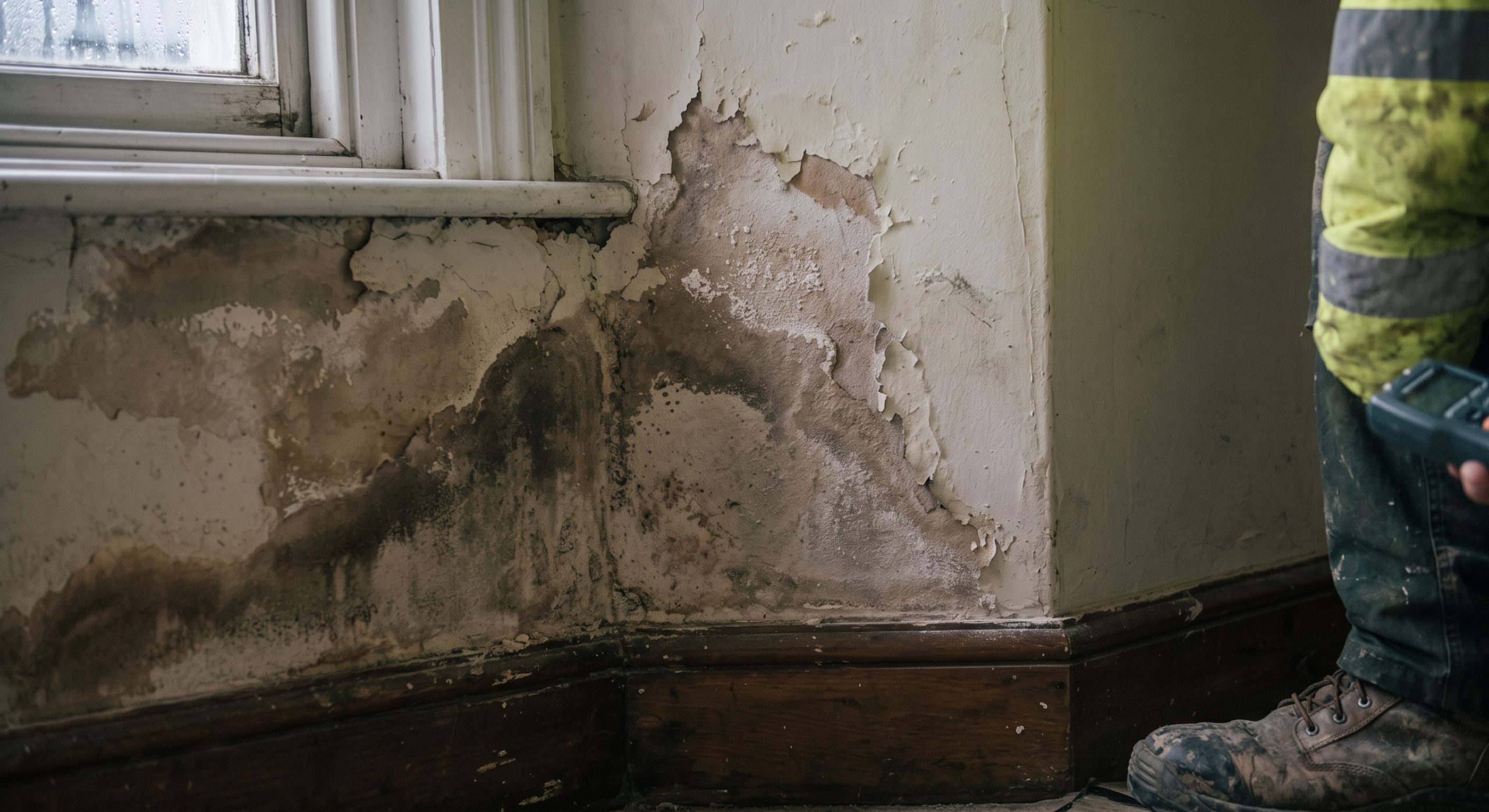
Swansea’s mix of coastal weather, older housing stock and long, wet autumns and winters makes damp one of the most persistent problems local homeowners face. Whether you’re in a Victorian terrace in Uplands or a semi out towards Morriston, the same driving rain and salty air that give the Gower its dramatic weather also push moisture into brickwork, render and window reveals. Understanding what type of damp you’re dealing with is the first and most important step, because the fix for one type can make another type worse.
Rising damp, penetrating damp and condensation are the three usual suspects, and they behave differently. Rising damp tends to show as a tide-mark low on internal walls, often with crumbling plaster and a musty smell, and is caused by moisture drawn up from the ground where a damp-proof course has failed or was never fitted properly. Penetrating damp comes in horizontally, usually through a cracked render, a blocked gutter, a perished pointing joint, or a leaking flashing around a chimney or bay window – all things that get tested hard during a Swansea winter of horizontal rain. Condensation, by far the most common of the three, is caused by everyday moisture from cooking, showering and breathing having nowhere to escape, and it shows up as black mould around cold spots like external corners, behind wardrobes, and on north-facing walls.
Before calling anyone out, a few practical checks can save time and money. Walk the outside of the property and look for blocked or overflowing gutters, cracked render, gaps around pipework, and soil or paving that has been built up above the damp-proof course – this last one is a very common cause of damp in older Swansea terraces where front gardens have been paved over the years. Inside, feel for cold spots and check whether extractor fans in the kitchen and bathroom are actually venting outside rather than into the loft. Simple habits help too: keeping lids on pans, drying washing outdoors or in a well-ventilated room, and opening trickle vents even in colder months all reduce the moisture load a house has to cope with.
If you’re already seeing mould return every winter despite ventilating well, a dehumidifier can make a genuine difference while you sort out the underlying cause, particularly in a bedroom or bathroom with little natural airflow. A
compact dehumidifier for damp and condensation control can pull excess moisture from the air and is a low-cost way to protect walls and belongings while you arrange more permanent repairs.
For anything beyond condensation – visible rising damp, salt staining, bowing plaster, or damp that keeps returning after redecorating – it’s worth getting a proper survey rather than guessing, since treatments like damp-proof course injection, tanking or replastering with breathable materials need to match the actual cause. In Swansea, K&R Damp Proofing and Surveyors based near Kings Dock offer surveying alongside remedial work, which is useful if you want an assessment before committing to treatment. Pioneer Dampproofing and Surveyors in Morriston is another established local option covering damp proofing and surveying work across the city. And if the damp has already damaged plaster or render and you need repair work alongside treatment, Swansea Plastering & Damp Proofing Services, based in St Thomas, combine plastering with damp proofing under one job.
As an Amazon Associate, Trusora earns from qualifying purchases.
Business details in this article are drawn from publicly available information rather than an in-person visit.
Leave a Reply